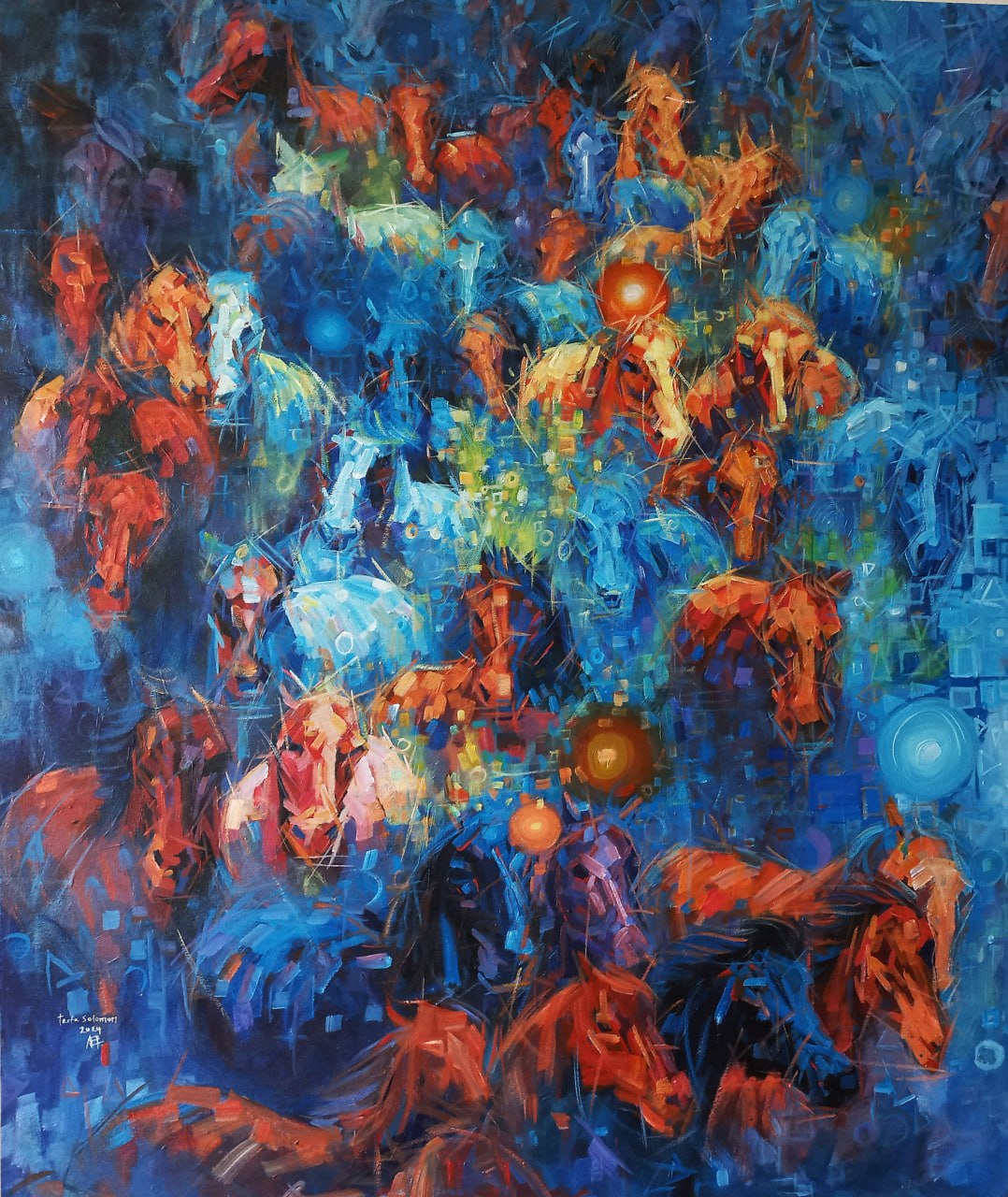
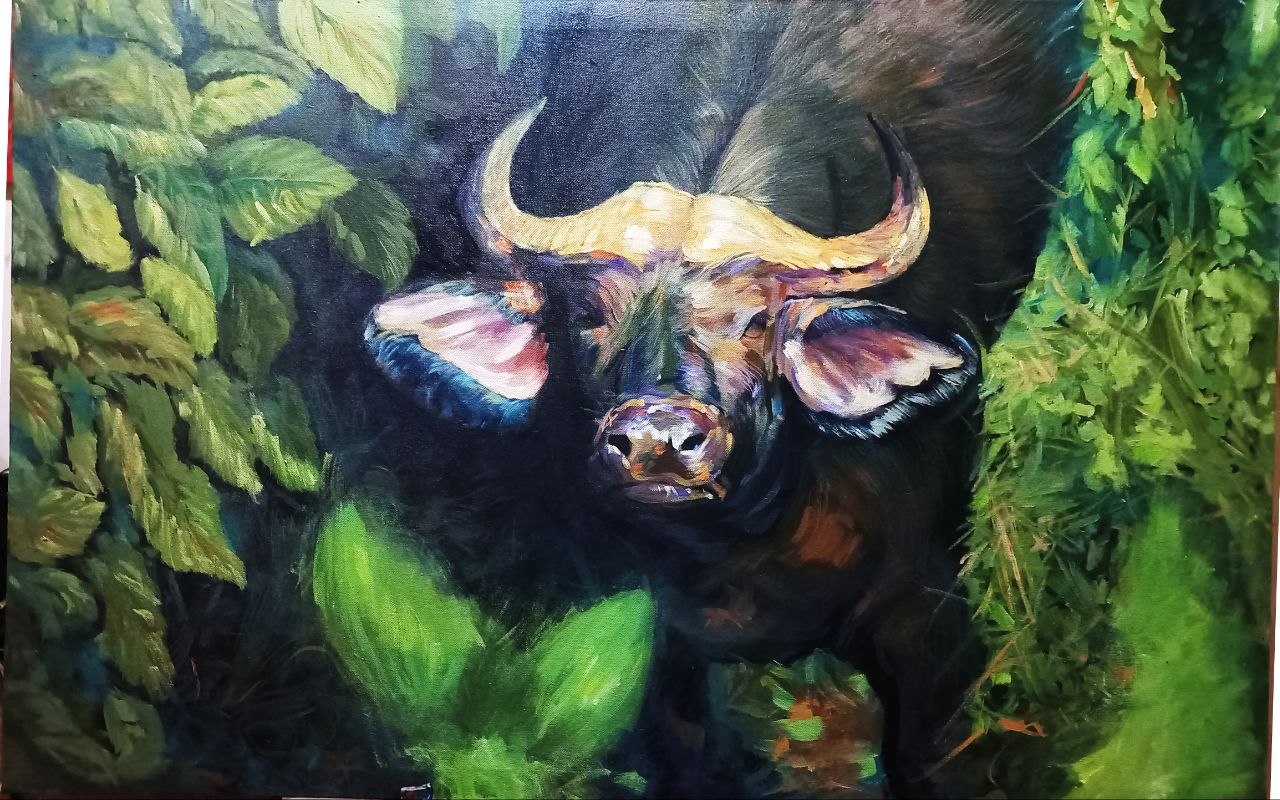
Not every canvas begins indoors. Tesfa Solomon’s zoo paintings grow from time spent looking at living form—light on hide and feather, the geometry of enclosure, the pause before movement. The zoo is treated as a place to study, not as a postcard subject.
Observation becomes acrylic colour and structure. Pattern, weight, and presence matter more than literal likeness. In that sense the zoo strand is related to market and urban themes: bodies gather, wait, and move under cover or open sky, and the painter’s job is to organise that energy on a flat surface.
Looking outside the gallery
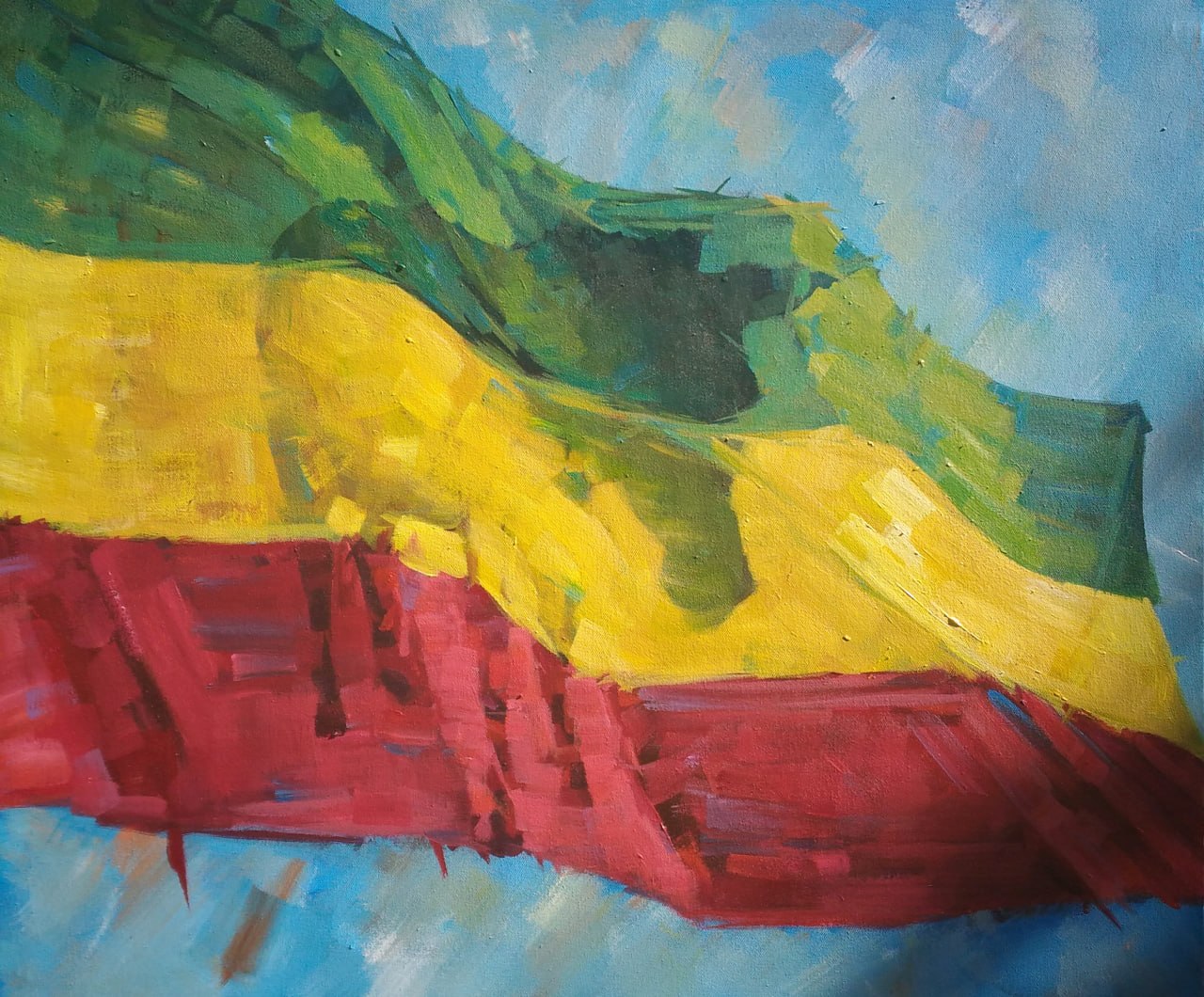
Zoo painting from the studio archive
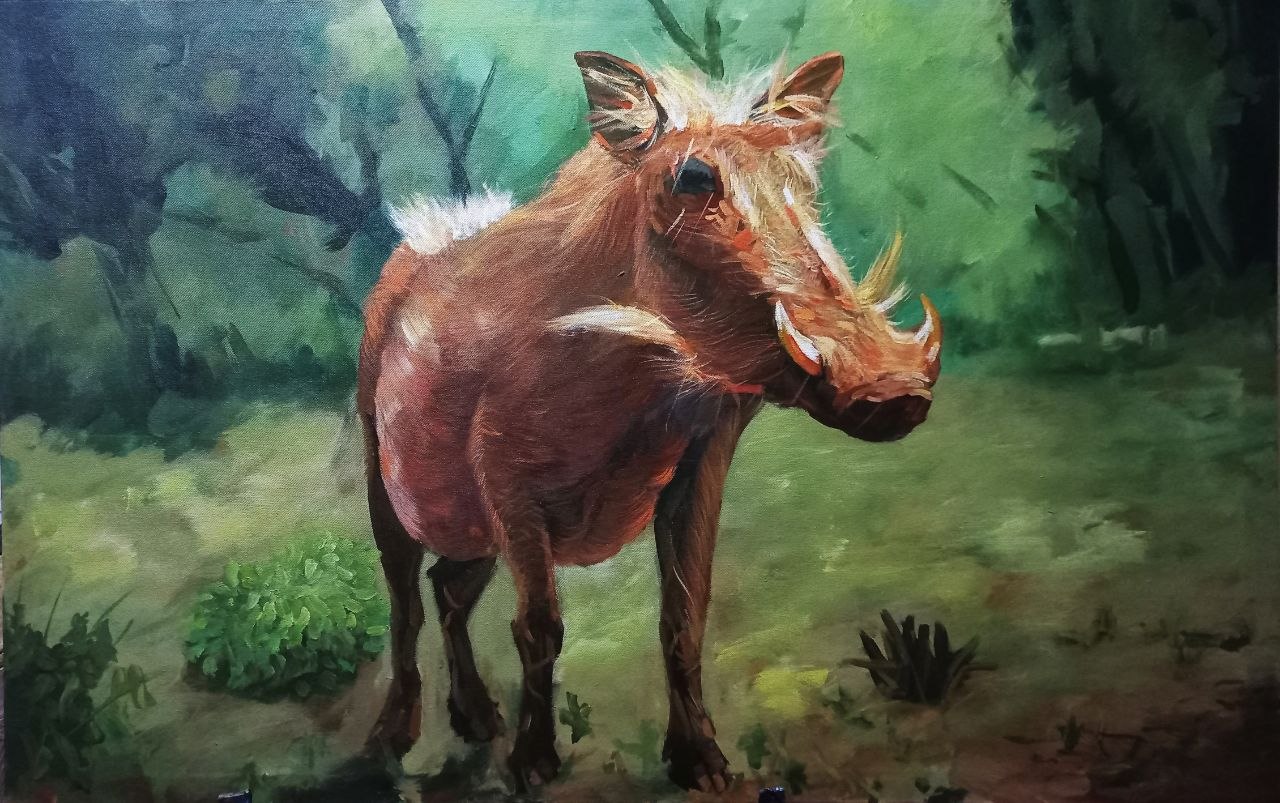
Seen beside market compositions, these works widen the field of everyday subjects. Enclosures and pathways create their own geometry; animals become anchors of colour and mass. The paintings keep the tension between stillness and imminent motion that makes looking at a zoo memorable in the first place.

Second zoo study from Tesfa Solomon’s archive
Use these images as a bridge between studio practice notes and exhibition chapters. Return to the Portfolio when you want installation photographs from Alliance, Tomoca, Matot, or group shows; return here when you want this strand of looking outside the gallery wall.
How it connects
Zoo work does not sit apart from teaching or public commissions. The same habits—patient looking, geometric organisation, acrylic clarity—appear in classrooms at Entoto TVET and in civic pieces on the corridor. Different sites, one discipline of attention.