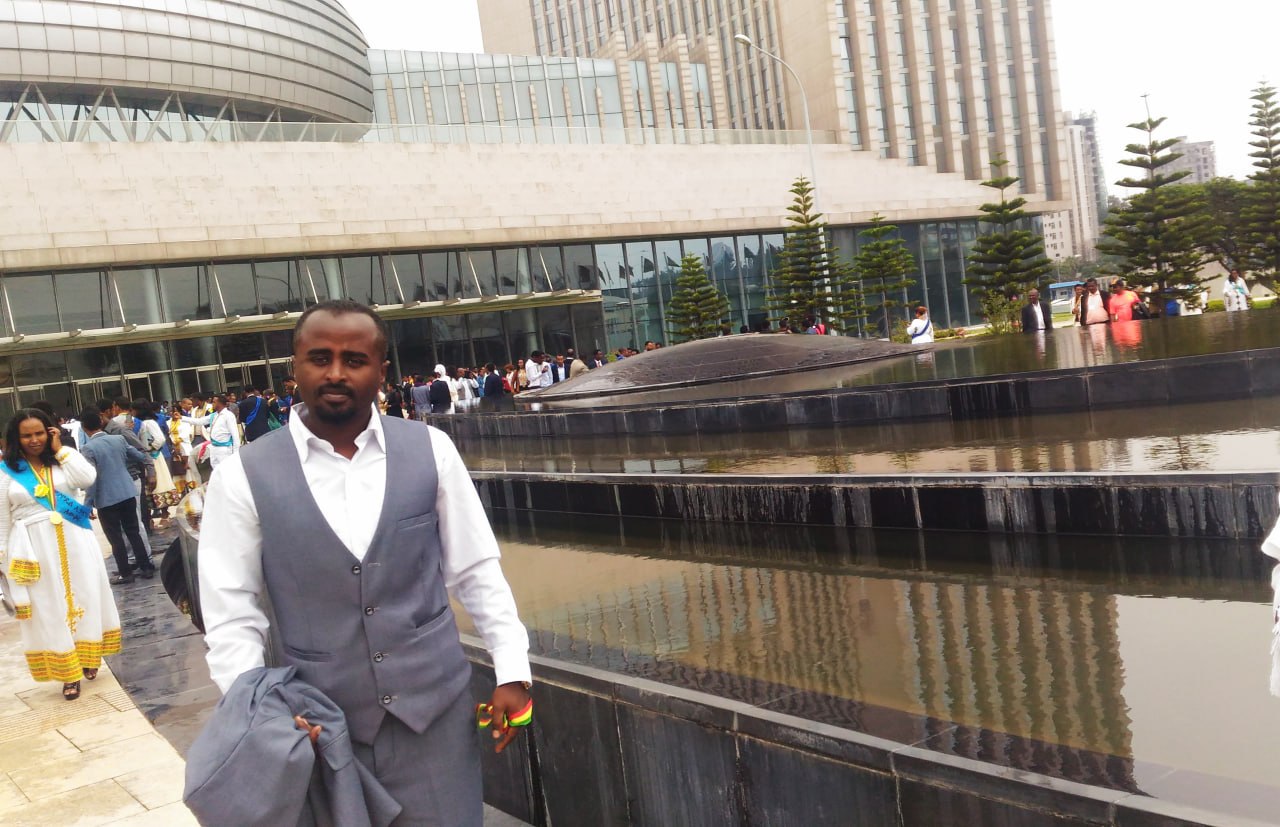
Beyond hanging his own exhibitions, Tesfa Solomon has served as a judge of the arts and received recognition that includes an African Union medal. Judging asks for careful looking—the same discipline that shapes studio painting. Jury work is not separate from practice; it is another form of attention paid to composition, craft, and the responsibility of naming quality in public.
Public evaluation has its own etiquette: fairness, clarity, and respect for makers who are also under pressure. Those habits sharpen how an artist later hangs and discusses their own work. They also keep the studio accountable to standards larger than a single exhibition cycle.
Recognition and jury archive
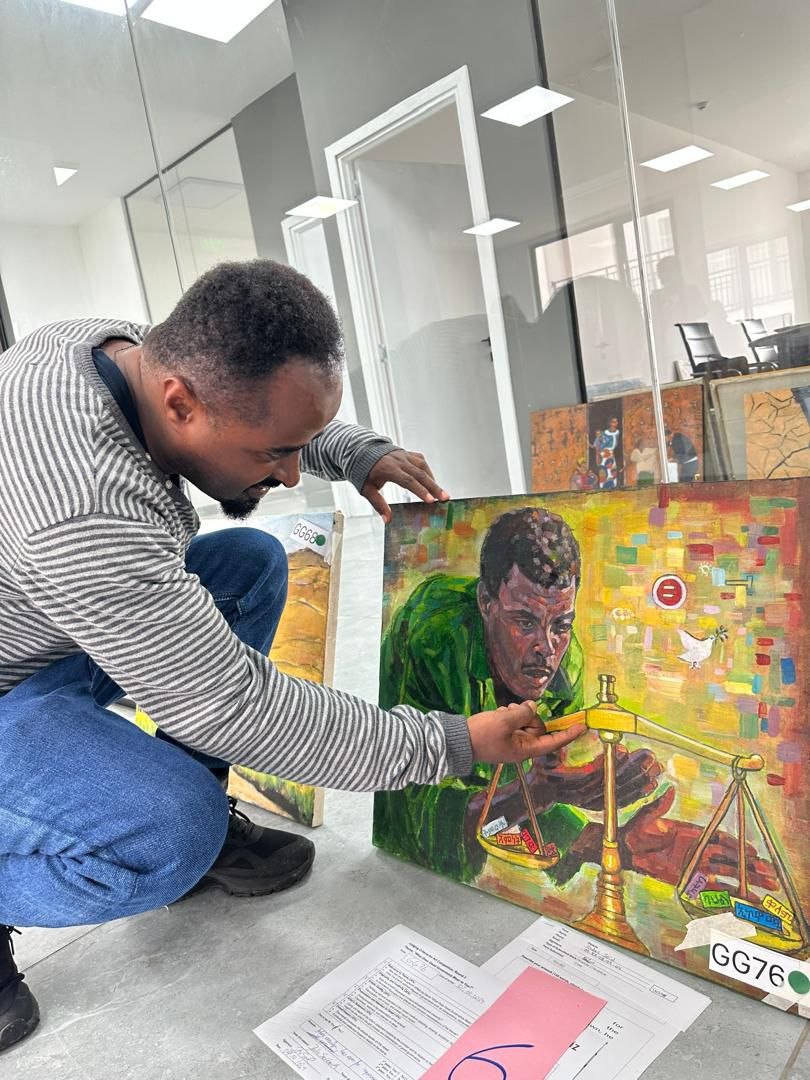
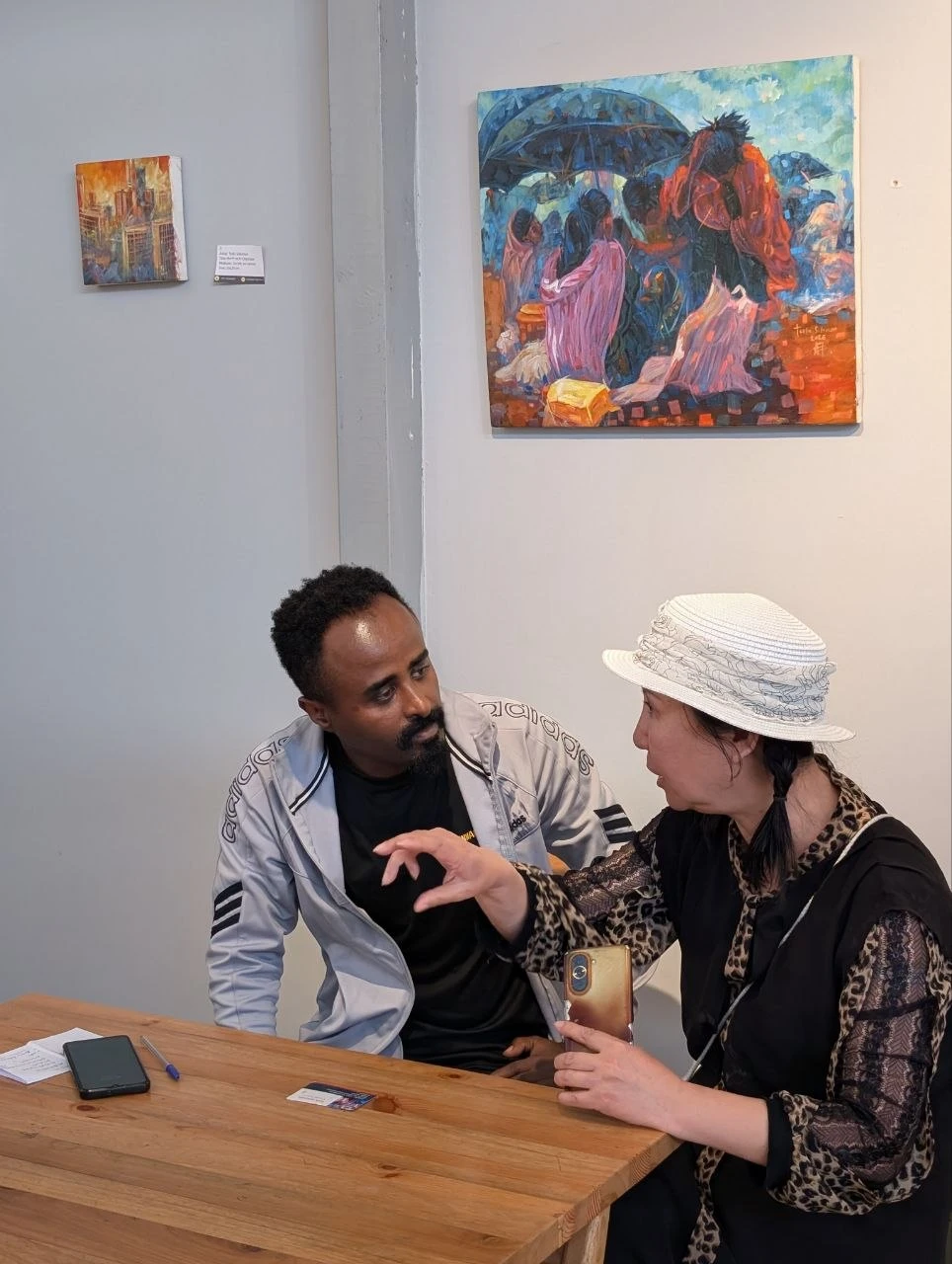
Archive photograph from judging of the arts
Documentation from competitions and ceremonies records colleagues, venues, and the formality of public evaluation. These images sit beside medals and certificates as evidence of service to the field—not as a substitute for the paintings themselves. They show the social room around looking: tables, audiences, and the pause before a decision is named.
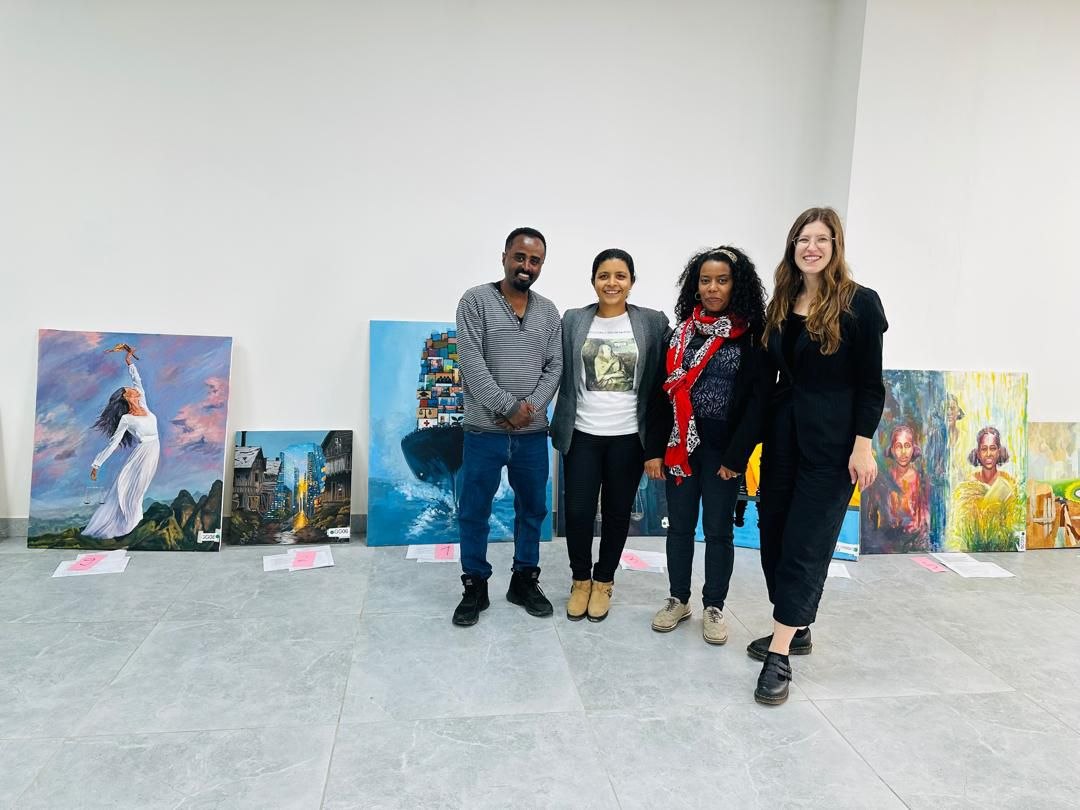
Arts jury and recognition documentation
Ceremony photographs also preserve how institutions stage honour—flags, stages, and formal dress—alongside the quieter work of reading surfaces. Both matter if you want a full picture of an artist’s public life in Addis Ababa and beyond.

African Union medal recognition
Return to the Portfolio for exhibition chapters; return here for the civic and professional roles that surround the studio. Awards are milestones; the longer story is continuous looking—whether on a jury table, in a classroom, or in front of a wet canvas. Pair this note with teaching and education essays to see how critique travels from school to jury to studio.